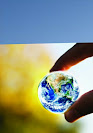
Climate Change-Arab Countries

Climate change is already affecting the Arab World in many ways. It will cause extreme heat to spread ,making some regions unlivable.Unfortunately, many of the Arab states are living in conditions of fragility and are consumed by the need to meet short-term goals. At the same time, the rich Gulf Arab states can afford to pump cold air onto sidewalks and in markets to allow for some comfort outdoors. Rising temperatures will put intense pressure on crops and already scarce water resources, potentially increasing migration and the risk of conflict.High temperatures are not just uncomfortable; they are disruptive to life in many respects.
By 2050, temperatures in the MENA will be 4°C higher, according to Germany’s Max Planck Institute. By the end of the century, daytime highs could reach 50°C, with 200 days of exceptional heat every year
The thought of what will happen in these cities as climate change worsens living conditions, if the standards of governance remain the same, is a frightening one.This limits their ability to participate in meaningful efforts to combat climate change or adapt to more sustainable infrastructure. Cities will feel an increasing heat island effect and most capital cities in the Middle East could face four months of exceedingly hot days every year.

Comments

Popular posts from this blog

Business Opportunities in UK

The UK's financial and professional services sector is unparalleled in scale and ranges from banking to insurance; asset management to foreign exchange; and professional service The British SME sector is booming.  At the start of 2020, there were 5.9 million small businesses, up 1.9% from the previous year,accounting for 50 per cent of the total revenue generated by UK businesses and 44 per cent of the country’s labour force. In the UK 1,22,512 work-related visas were granted in the year ending March 2021 which was 37% fewer than the previous year. expect demand to rise considerably throughout 2021 and 2022.  The UK economy grew by 1.4% in 2018, a considerable slowdown compared to the results obtained in previous years. This reflects uncertainty about the Brexit before entrepreneurs, investors The UK economy grew by 1.4% in 2018, a considerable slowdown compared to the results obtained in previous years.  The 10% richest earn ten times as much as the 10% poore...

Oil Storage Terminals: The Strategic Backbone of Global Energy Trade

 Oil storage terminals are critical infrastructure within the global energy ecosystem, serving as the foundation for oil logistics, strategic trade, and energy security. These facilities go far beyond functioning as mere warehouses for crude oil or refined products—they are sophisticated, multifunctional hubs that support international trade flows, offer stability during periods of market volatility, and empower nations and businesses with strategic flexibility in energy management, processing, and distribution. The strategic importance of these terminals lies in their ability to balance supply and demand, particularly during geopolitical disruptions, natural calamities, or seasonal consumption shifts. Countries with robust terminal infrastructure can stockpile reserves, safeguarding against global oil shocks and reducing their vulnerability to supply chain interruptions. Moreover, terminals provide vital commercial opportunities—traders and refiners can buy oil at lower prices, st...

Dubai:1990-2021

The City has been revealed as one of the fastest-growing cities in the world, claiming a population boom of over 500% in recent decades. The last 30 years have seen the population of Dubai grow to 2,785,000. That's a remarkable growth of 569%, although oil only accounts for 1% of the GDP Dubai has transformed from a desert backwater port to a thriving metropolis with the third-most skyscrapers in the world. The City's economy kicked into full gear and a development boom began that, aside from a drastic crisis around 2009, From having the world’s tallest building to man-made islands in the shape of a world map Dubai has a $20 billion megacomplex with the world's 2nd-largest mall, the world's tallest building, an aquarium, and 1,200 stores   1990 showing an annual rise in GDP of around 6 per cent, then 1990 through 2005 showing an annual rise of about nine per cent. If one focuses on the years 2000 through 2008, one sees an extraordinary growth rate, on averag...